
India's seaweeds
844 species along 7,500 km of coast. A handful are farmed, and one of them carries almost all of it.
In short
- 844 species
- Seaweeds recorded on India's coast, about 60 of them commercially valuable. Ministry of Fisheries via PIB, 3 April 2025
- 72,385 t
- Seaweed produced in India in 2023, wet weight. Most is still gathered from wild beds, not farmed: about 47,000 t of Sargassum, Turbinaria, Gracilaria and Gelidiella, by nearly 5,000 families in Tamil Nadu. ICAR-CMFRI via PIB, 18 March 2025; Johnson et al., ICAR-CMFRI 2023
- 115 ha
- Area actually farmed in 2024–25: Tamil Nadu 107.9 ha, Gujarat 5.9, Andhra Pradesh 1.0. Against that, 384 sites and 24,707 ha have been found suitable. Lok Sabha reply, 12 February 2026
- 7,768 farmers
- People farming seaweed, 7,230 of them in Tamil Nadu. Lok Sabha reply, 12 February 2026
- 1 species
- Nearly all farming is Kappaphycus alvarezii, grown from a narrow Philippine stock. When ice-ice disease struck in 2013–14, output fell from 1,490 to 40 tonnes dry. Mishra and Mantri, Frontiers in Aquaculture 2026
- ₹640 crore
- Set aside for seaweed under PMMSY for 2020–25, of which ₹198.17 crore of projects were approved. PIB, 3 April 2025; Lok Sabha reply, 12 February 2026
Simply put
Seaweeds are algae, not plants. They have no roots, take everything they need from sea water and sunlight, and some grow by a few per cent of their weight every day. Farming them needs no land, fresh water or fertiliser. You tie small pieces to ropes, float the ropes in shallow, calm, clean sea, and six weeks later you cut most of it and tie the rest back on. The harvest is dried on the beach and sold to factories that pull out gels: carrageenan and agar from red seaweeds, alginate from brown ones. Those gels thicken ice cream and toothpaste and set jelly and lab plates. Green seaweeds are eaten. Much of the rest goes to farm biostimulants. Blue Gold shows where along India's coast the water suits this, and what a farm there could earn.
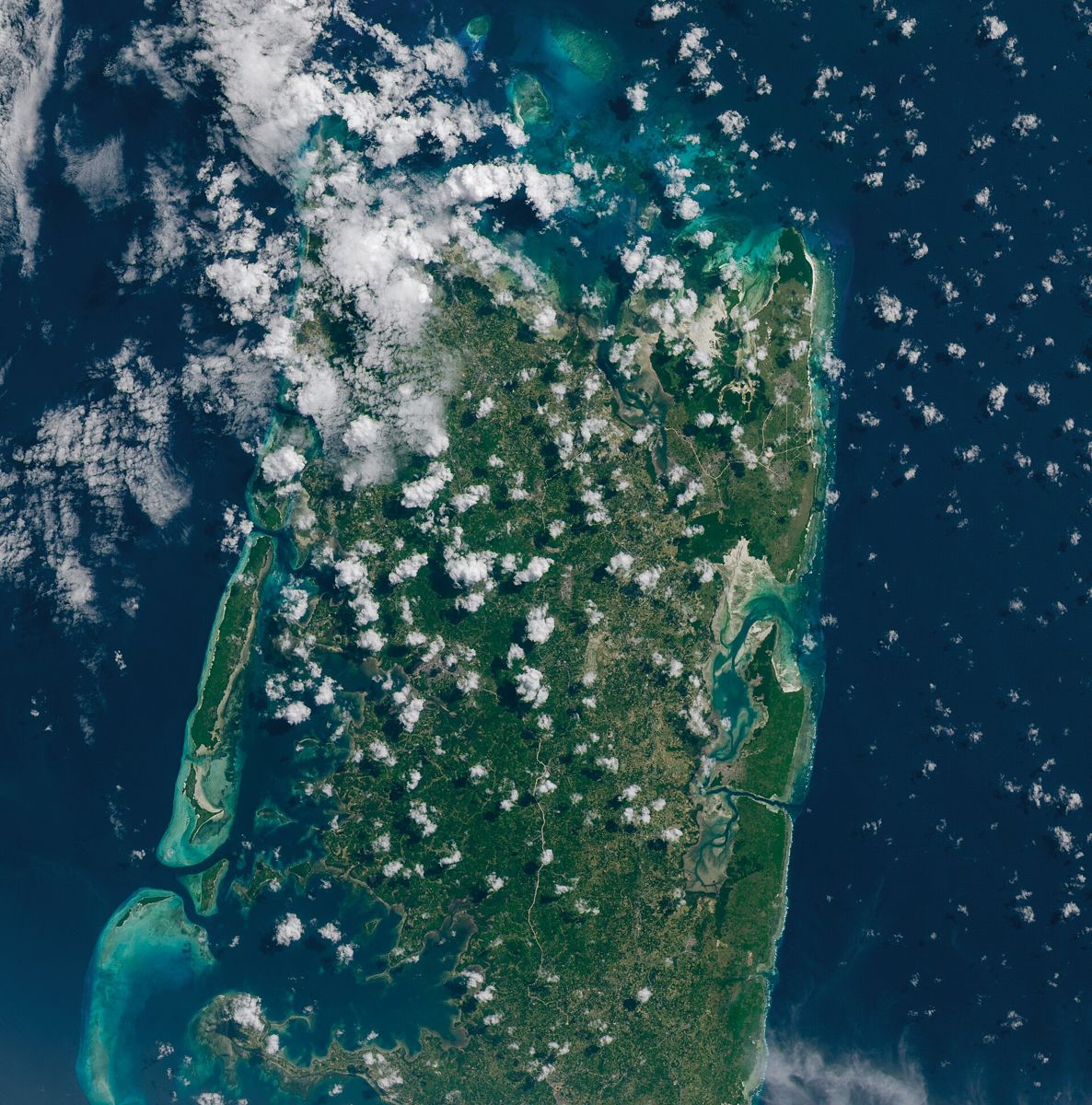
The seaweeds
Three colours, three products. Red seaweeds give carrageenan and agar, brown give alginate, green are mostly food. These are the ones that matter in India.
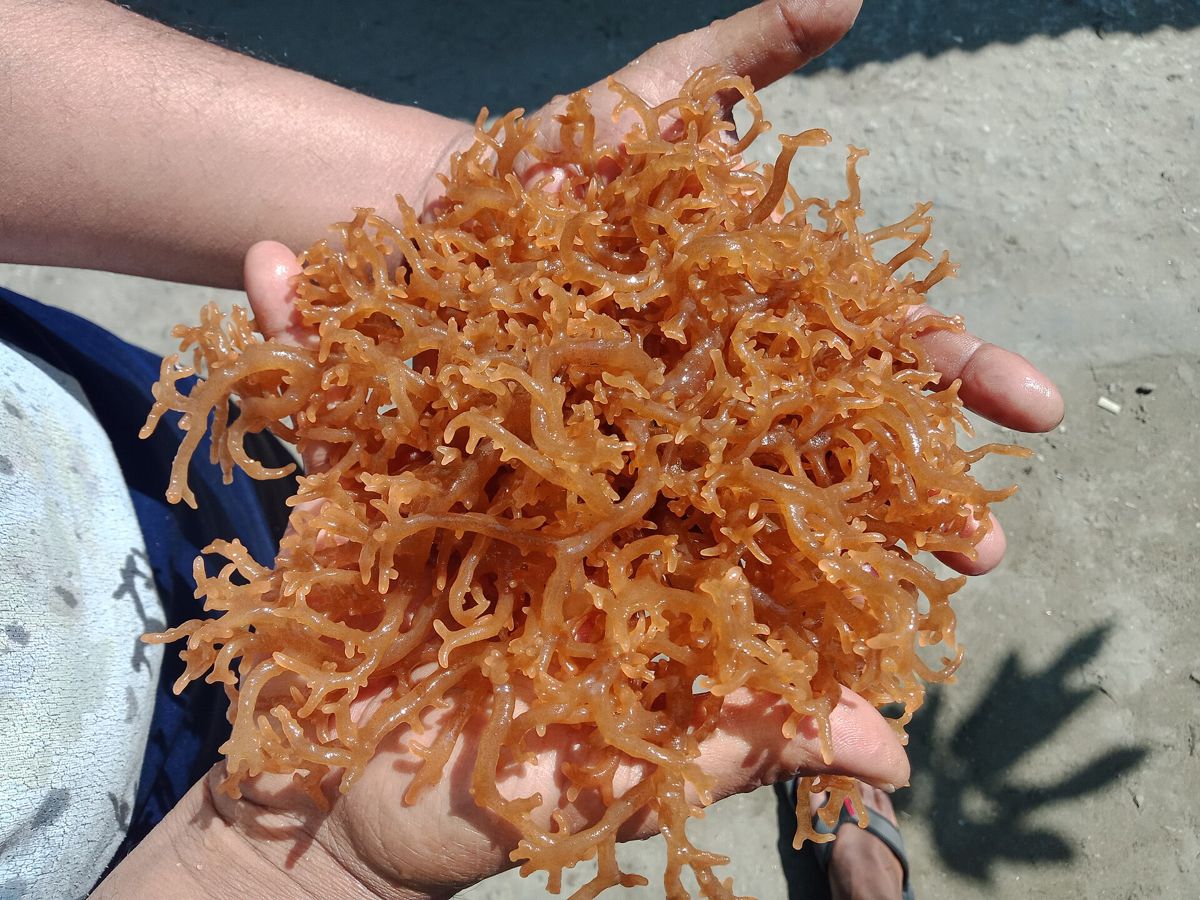
Kappaphycus alvarezii
Brought from the Philippines through CSIR-CSMCRI: first tried in the sea at Okha, Gujarat, in the 1990s, then at Mandapam, and farmed commercially in Tamil Nadu from 2001. It grows 5–6% a day and is harvested every 45 days, two to three times faster than India's native red seaweeds, which is why farming settled on it (Mishra and Mantri 2026). Seed of 150 g grows to 500–1,000 g in 45 days (Johnson et al. 2023).

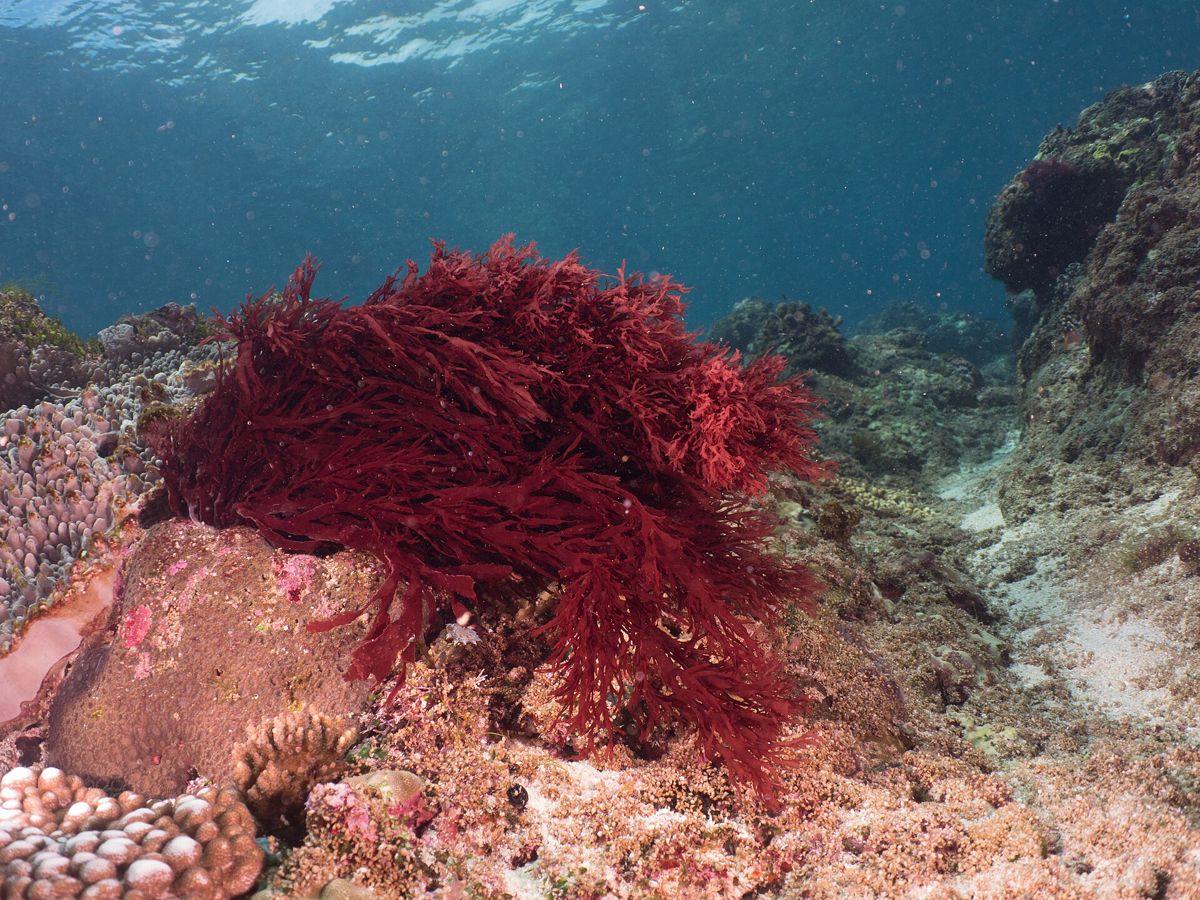
Gracilaria: G. edulis, G. debilis, G. dura, G. salicornia
India's own agar weeds. G. edulis and G. debilis have fed food-grade agar units for over thirty years, many of them small plants around Madurai that ICAR-CMFRI's Mandapam centre helped set up. G. dura is the raw material for agarose, the gel used to separate DNA, and is farmed on bamboo rafts off Gujarat and Tamil Nadu (Veeragurunathan et al. 2015; 2019). Native Gracilaria grows 2–3% a day on a 60–90 day cycle, so a unit earns about USD 584 a year against USD 1,401 for Kappaphycus (Mishra and Mantri 2026). Since 2020, G. edulis trials in Lakshadweep have shown promising growth (Johnson et al. 2023).
_(48737220543).jpg)
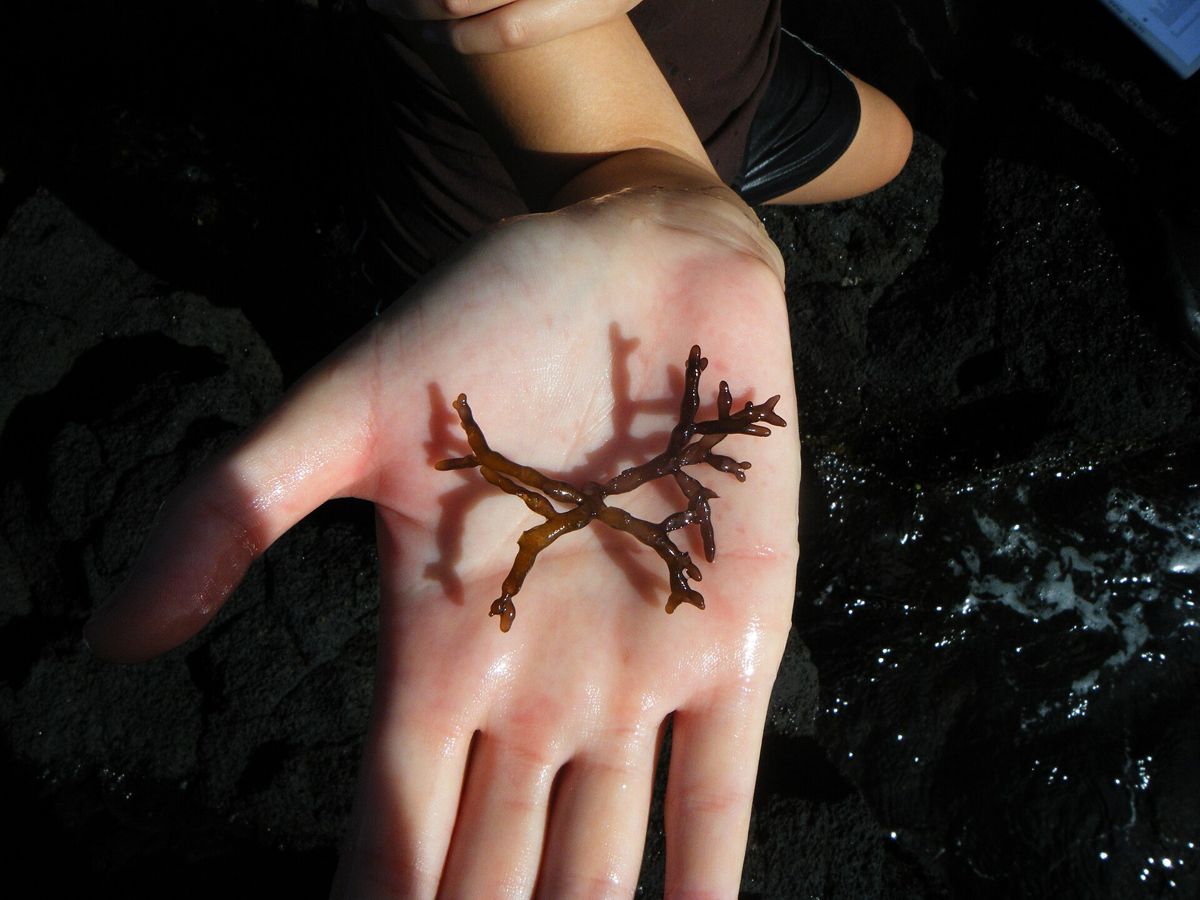

Gelidiella acerosa
A small, wiry red weed of the Gulf of Mannar's reefs and rocks, gathered by hand for the best agar, including bacteriological grade. Trials have grown it on coir ropes and rafts, but slowly (Mishra and Mantri 2026).
Hypnea musciformis
A native source of the same gel Kappaphycus gives, farmed experimentally off the southeast coast (Ganesan, Thiruppathi and Jha 2006). One of the native candidates that could spread the risk of relying on one imported species.
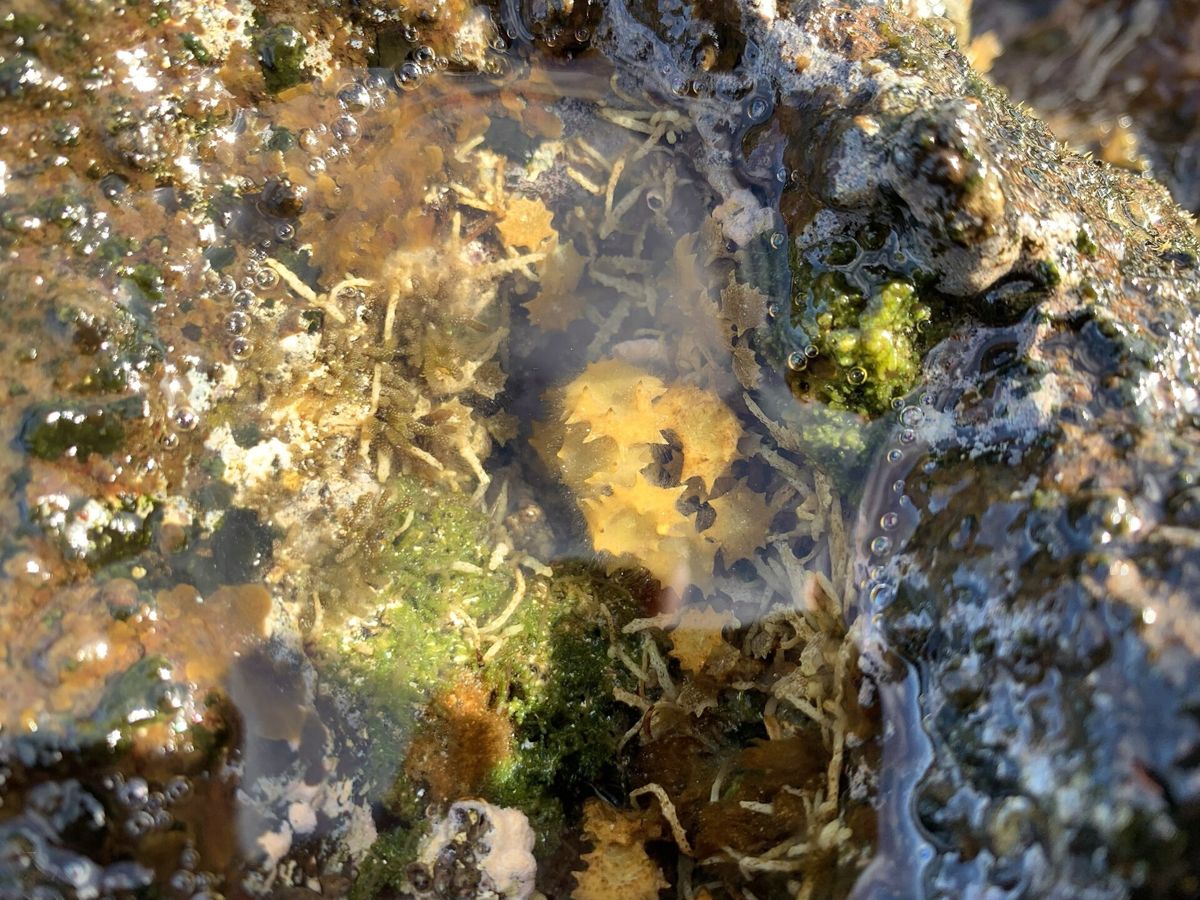
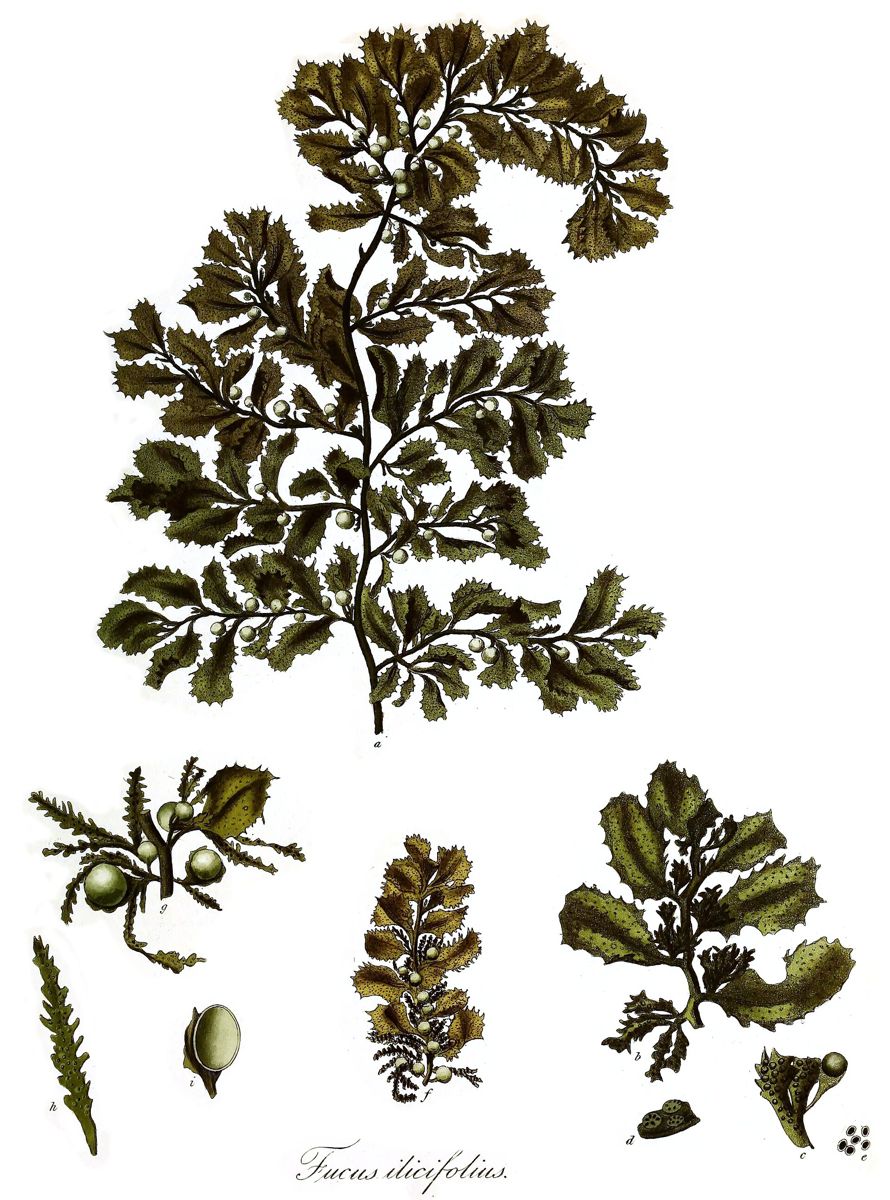
Sargassum and Turbinaria
The bulk of India's wild harvest. Women from Ramanathapuram go out by boat to the Gulf of Mannar islands and dive for them by hand. Alginate thickens food, cosmetics and wound dressings; the rest becomes liquid seaweed fertiliser and biostimulants, which India regulates under the Fertiliser (Control) Order, 1985 (PIB 2025).
.jpg)

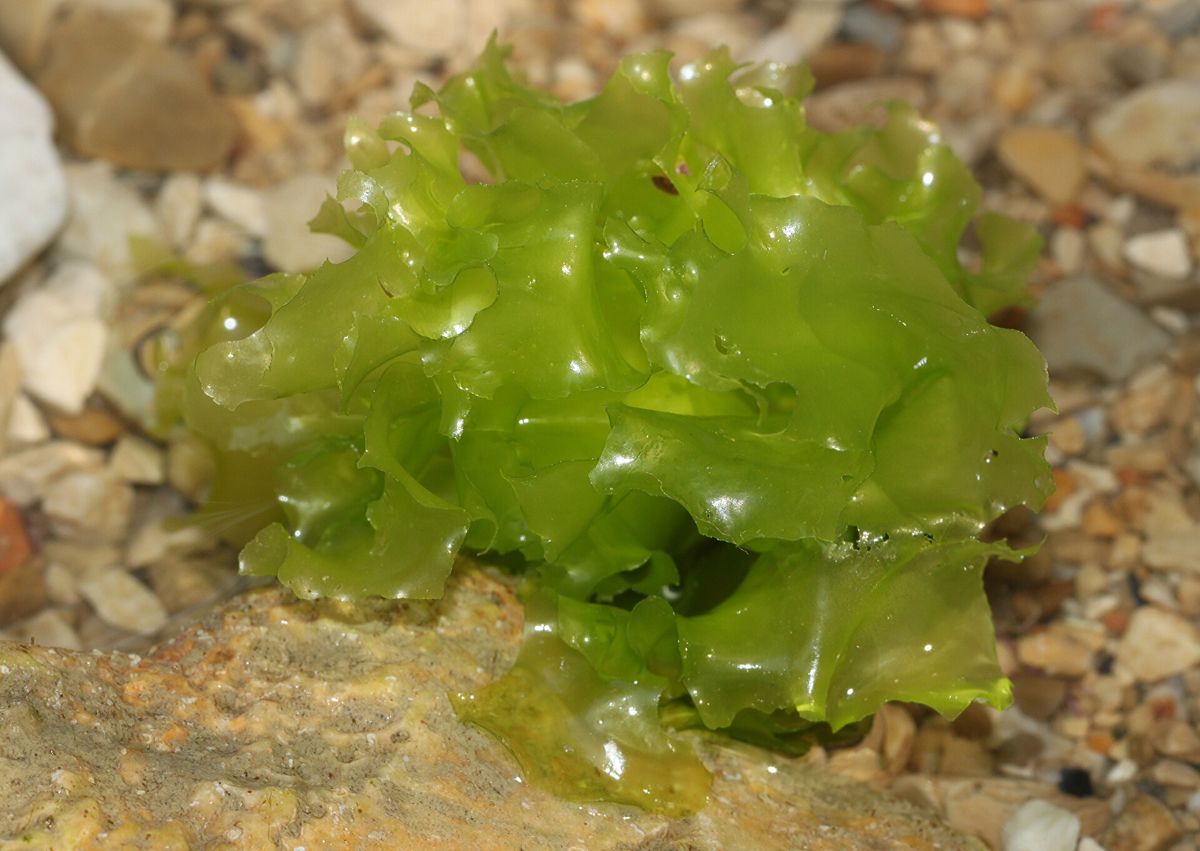
Ulva, sea lettuce
Up to 26% protein by dry weight. CSIR-CSMCRI grows it from spores in tanks on land: 100,000 seedlings in 45 days in the lab, then grown out in another 45 (CSIR-CSMCRI). The one on this list most likely to reach Indian plates.

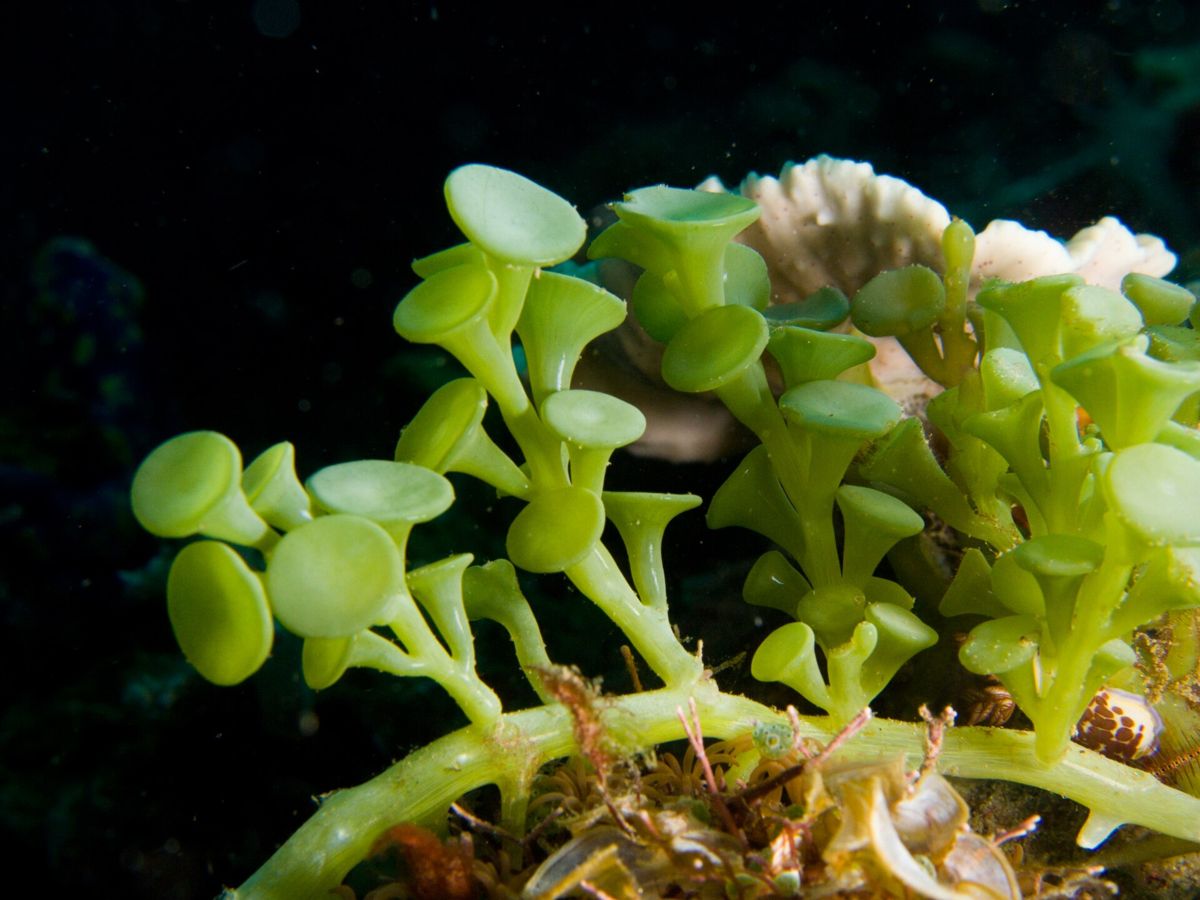
Caulerpa, sea grapes
Eaten fresh across Southeast Asia as "green caviar"; C. racemosa grows wild on India's southeast coast. A food crop India could grow, if a market for it is built.

Pyropia vietnamensis, laver
One of the most luxuriant seaweeds of the Konkan's rocky shore, growing across the whole intertidal zone in the monsoon, from Maharashtra into Karnataka (Kavale et al. 2015). Close to Goa, and not yet farmed.
Farming
India farms seaweed three ways, all near shore (Johnson et al. 2023):
- Bamboo raft, for calm, shallow water. A 3.6 × 3.6 m frame carries 20 ropes, each with 20 pieces of 150–200 g: 60–80 kg of seed a raft. Rafts are tied in fives and anchored at 1–1.5 m depth, about 400 to a hectare.
- Monoline, for moderate waves. Ropes strung between casuarina poles set 3 × 6 m apart; one unit yields about as much as one raft.
- Tube net, for rougher water. A 25 m tube of food-grade net, filled with 15 kg of seed and floated below the surface; four tubes equal one raft.
A crop takes 45–60 days, and four to six fit in a year. Farms are visited every day to clean off other weeds and silt. After a year or two, the bamboo and rope must be brought ashore, not left in the sea.
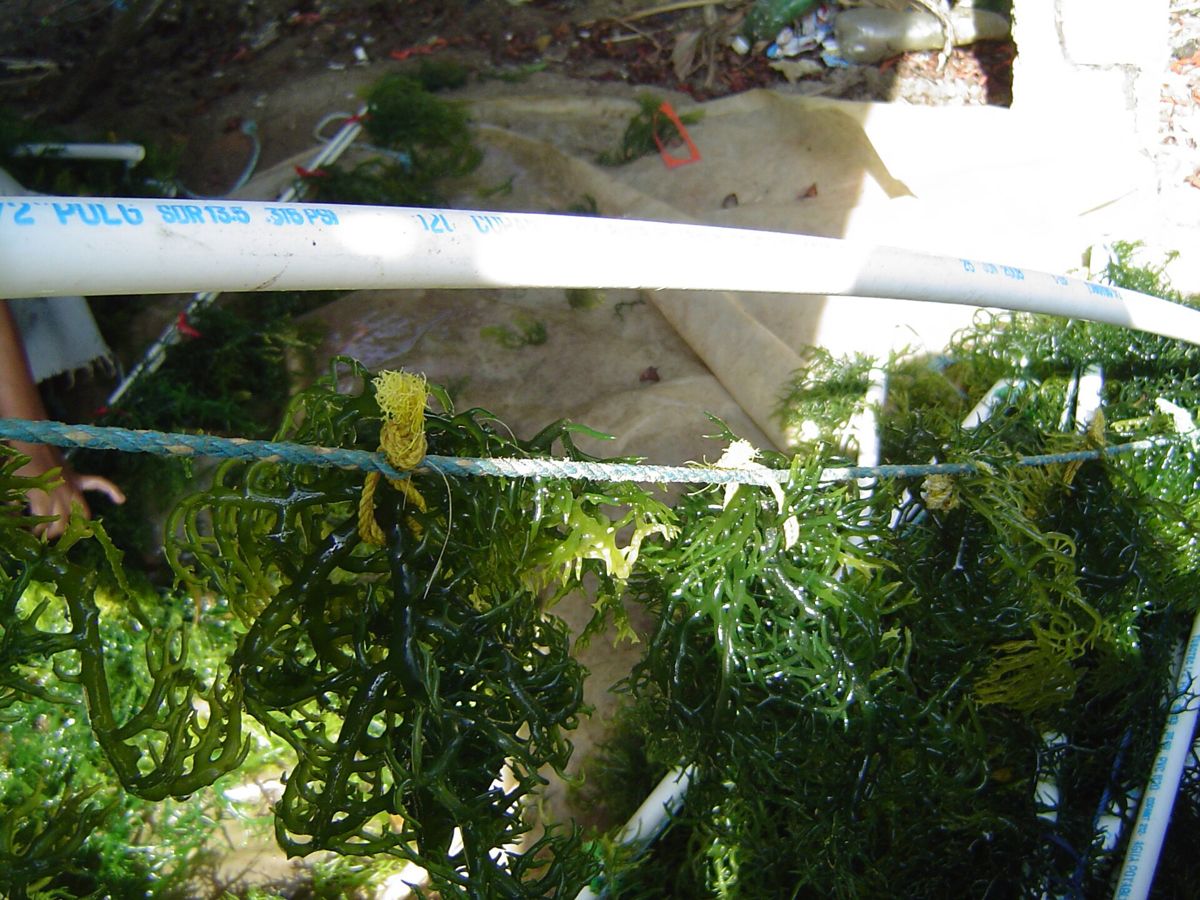

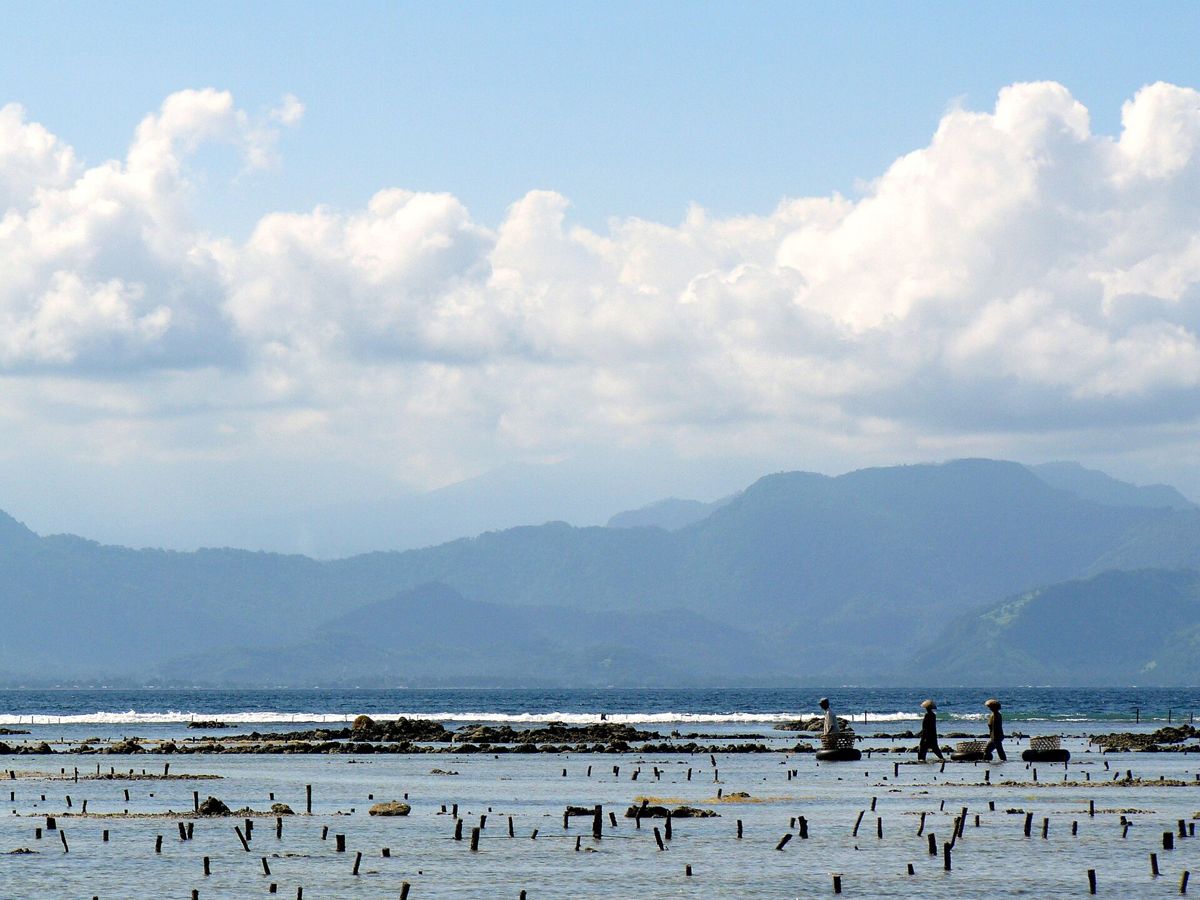
.jpg)
Money
ICAR-CMFRI's own sums for Kappaphycus, which the Blue Gold model uses (Johnson et al. 2023): a raft gives 1,000 kg wet a year, of which 240 kg goes back as seed. The 760 kg left dries to 10%, 76 kg, which sells at about ₹95 a kilo: ₹7,220 a year. A raft costs ₹2,500 a year to run, including its build, so it nets ₹4,720. One person can tend about 45 rafts, about ₹2.1 lakh a year; a hectare of 400 rafts, ₹18.9 lakh.
Farmers are paid ₹16–18 a kilo fresh and ₹80–110 dry. Grown beside cobia sea cages, rafts yielded 390 kg against 250 kg, 56% more, because the seaweed feeds on the fish farm's waste. This is integrated multi-trophic aquaculture.
Draw a parcel on the map to run these numbers for your own water.
What goes wrong
Ice-ice. The only disease reported on Indian farms. Under stress from low salinity, heat or poor light, branches turn white and fall apart. The fix is to harvest everything and start again with new seed (Johnson et al. 2023). Because every farm grows clones of the same few imported plants, the 2013–14 outbreak took almost the whole industry down at once: 1,490 tonnes dry in 2013, 40 in 2014, and 950 farmers down to 200 (Mishra and Mantri 2026).
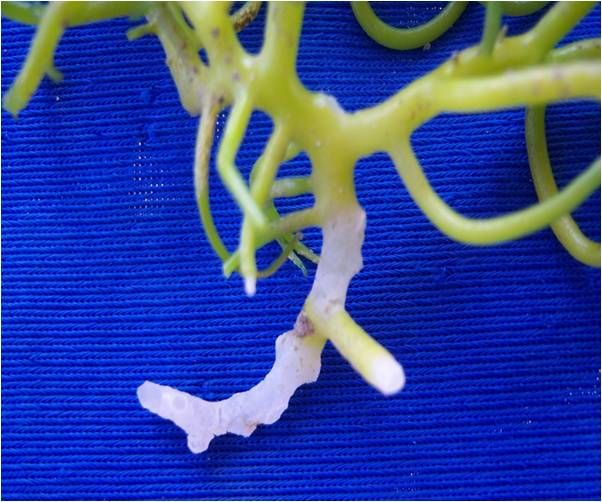
Weeds, storms, grazers. Other seaweeds smother the crop when the monsoon turns the currents. A cyclone can wipe a farm out; on a warning, farmers harvest early and keep some seed in net bags in deeper water.
Escape onto reefs. Kappaphycus has spread from farms onto branching corals at Kurusadai Island in the Gulf of Mannar, where it forms mats that shade and smother them (Mandal et al. 2010; Kamalakannan et al. 2010). Commercial farming near the Gulf of Mannar's reefs has been restricted since. Other surveys find the spread small; one put it at 0.00022% of the reef at Mulli Island (reported in Mishra and Mantri 2026). Blue Gold does not yet mark coral reefs or marine parks on its favourable water; check with your state fisheries department before farming near either.
One species. On 21 October 2024 the Department of Fisheries issued India's first rules for importing live seaweed, to bring in new, healthier strains under quarantine at ICAR-NBFGR and CSIR-CSMCRI (PIB, 18 March 2025). The longer answer is breeding India's own species.
People
Seaweed work in India is mostly women's work, from diving for wild Sargassum and Gelidiella in the Gulf of Mannar to tying seed on raft ropes. Tamil Nadu has 7,230 of the country's 7,768 seaweed farmers. Mongabay reports that many women farmers are leaving for other jobs as incomes wobble, even as the government plans to expand (Mongabay India, October 2023).
Carbon
A growing seaweed takes in carbon dioxide: ICAR-CMFRI estimates about 19 kg of CO₂ a day for every tonne of dry Kappaphycus on the ropes (Johnson et al. 2023). That is uptake, and it is real. It is not the same as removal.
Carbon is only taken out of the air for good if it stays out for a long time: sunk to the deep sea or buried in sediment. Seaweed that is harvested and eaten, or turned into carrageenan and toothpaste, breathes its carbon back out within months or years. Wild seaweed that tears loose and sinks does lock some away; one global estimate is about 173 million tonnes of carbon a year (Krause-Jensen and Duarte 2016). But farmed seaweed that is harvested is a different case, and any claim of removal needs careful, site-by-site accounting of where the carbon ends up (Hurd et al. 2022).
So Blue Gold reports both, apart: the CO₂ your farm would take up, and the CO₂ it would remove, which is zero when the crop becomes food or carrageenan. Seaweed farms still do other good: they soak up nutrients from polluted water and give fish and shellfish shelter.
Schemes
- PMMSY (Pradhan Mantri Matsya Sampada Yojana), from June 2020: ₹640 crore for seaweed over 2020–25 and a goal of 1.12 million tonnes. Projects worth ₹198.17 crore approved, including 47,245 rafts and 63,881 monoline or tube-net units (PIB, 3 April 2025; Lok Sabha reply, 12 February 2026). Your state fisheries department sets the subsidy per farmer and takes applications.
- Multipurpose Seaweed Park, Valamavur, Ramanathapuram, Tamil Nadu: ₹127.7 crore, for processing and jobs for fisherwomen (PIB, September 2023).
- Seed banks approved for Tamil Nadu, Dadra and Nagar Haveli and Daman and Diu, and Lakshadweep. ICAR-CMFRI's Mandapam centre is the Centre of Excellence for seaweed; Lakshadweep is a seaweed cluster (PIB, 18 March 2025).
- Import guidelines for live seaweed, 21 October 2024 (above).
Who works on it
| Who | Where | What they do |
|---|---|---|
| ICAR-Central Marine Fisheries Research Institute (CMFRI) | Kochi; Mandapam | Surveyed the coast for farm sites (the sites on the Blue Gold map); raft, monoline and tube-net methods; farm economics; training; Centre of Excellence at Mandapam. |
| CSIR-Central Salt and Marine Chemicals Research Institute (CSMCRI) | Bhavnagar; Mandapam | Brought in and tissue-cultured Kappaphycus; farming of Gracilaria dura and G. debilis; Ulva on land; agar and agarose processes; seaweed biostimulants; import quarantine. |
| Department of Fisheries and NFDB | New Delhi; Hyderabad | PMMSY funding, the Seaweed Park, seed banks, import guidelines. |
| State fisheries departments | Coastal states | Beneficiary subsidies, sea leases, training; Tamil Nadu leads. |
| ICAR-NBFGR | Lucknow | Quarantine for imported seaweed under the 2024 guidelines. |
| AquAgri Processing | Tamil Nadu | The main buyer and processor of farmed Kappaphycus since the 2000s, first with PepsiCo. |
| Agar units | Madurai and around | Small plants making food-grade agar from native Gracilaria. |
Papers
- Turning the tide: India's new seaweed import guidelines and their implications for sustainable aquaculture · Mishra P, Mantri VA · 2026 · Frontiers in Aquaculture 5 · doi:10.3389/faquc.2026.1833554
- Seaweed farming technologies · Johnson B, Ranjith L, Divu D, Mojjada SK, Koya M, Tamilmani G, Ignatius B, Suresh VVR, Gopalakrishnan A · 2023 · ICAR-CMFRI, International Workshop-cum-Training on Fisheries Management and Aquaculture · eprints.cmfri.org.in/17847
- Substantial role of macroalgae in marine carbon sequestration · Krause-Jensen D, Duarte CM · 2016 · Nature Geoscience 9:737–742 · doi:10.1038/ngeo2790
- Forensic carbon accounting: assessing the role of seaweeds for carbon sequestration · Hurd CL, Law CS, Bach LT, Britton D, Hovenden M, Paine ER et al. · 2022 · Journal of Phycology 58:347–363 · doi:10.1111/jpy.13249
- Regulatory ecosystem services through large-scale commercial farming of Kappaphycus alvarezii: pan-India potential estimates · Bhushan S, Veeragurunathan V, Kavale MG, Jaiswar S, Mantri VA · 2023 · Journal of Applied Phycology 35:1945–1956 · doi:10.1007/s10811-023-03001-3
- Invasion potential of Kappaphycus alvarezii on corals at Kurusadai Island, Gulf of Mannar, India · Mandal SK, Mantri VA, Haldar S, Eswaran K, Ganesan M · 2010 · Algae 25:205–216 · doi:10.4490/algae.2010.25.4.205
- Turbinaria sp. as victims to Kappaphycus alvarezii in reefs of Gulf of Mannar, India · Kamalakannan B, Jeevamani JJJ, Nagendran NA, Pandiaraja D, Krishnan Kutty N, Chandrasekaran S · 2010 · Coral Reefs 29:1077 · doi:10.1007/s00338-010-0684-4
- Cultivation of Gracilaria dura in the open sea along the southeast coast of India · Veeragurunathan V, Eswaran K, Malarvizhi J, Gobalakrishnan M · 2015 · Journal of Applied Phycology 27:2353–2365 · doi:10.1007/s10811-014-0514-0
- Gracilaria debilis cultivation, agar characterization and economics: bringing new species in the ambit of commercial farming in India · Veeragurunathan V, Prasad K, Malar Vizhi J, Singh N, Meena R, Mantri VA · 2019 · Journal of Applied Phycology 31:2609–2621 · doi:10.1007/s10811-019-01775-z
- Mariculture of Hypnea musciformis (Wulfen) Lamouroux in South east coast of India · Ganesan M, Thiruppathi S, Jha B · 2006 · Aquaculture 256:201–211 · doi:10.1016/j.aquaculture.2006.01.039
- Morphological, ecological and molecular characterization of Pyropia vietnamensis (Bangiales, Rhodophyta) from the Konkan region, India · Kavale MG, Kazi MA, Sreenadhan N, Singh VV · 2015 · Phytotaxa 224 · doi:10.11646/phytotaxa.224.1.3
Sources
- PIB, 18 March 2025: Seaweed Production (Lok Sabha reply)
- PIB, 3 April 2025: Seaweed, a nutritional powerhouse from the ocean
- PIB, September 2023: foundation stone of the Multipurpose Seaweed Park
- Lok Sabha reply of 12 February 2026, as reported by Global Agriculture
- CSIR-CSMCRI: land-based cultivation of Ulva
- Mongabay India, October 2023
- Films: ICAR-CMFRI, World Bank Group, Scroll.in
- Photos: Wikimedia Commons, credited under each one
- Papers above
Not an official ICAR, CSIR or Department of Fisheries page. Figures are as published by the sources named; farm figures are estimates, not a guarantee.