
India's sacred groves
Patches of forest left standing for a deity or the ancestors. One of the oldest ways of keeping a forest, with a different name in almost every region.
In short
- 1–1.5 lakh
- Sacred groves India likely has, by the best estimate; nobody has counted them all.Malhotra et al., INSA 2001
- 13,720
- Groves reported in surveys across 19 states by 2001. Most of the rest are known only to the villages that keep them.Malhotra et al., INSA 2001
- 25,000 orans
- In Rajasthan alone, over about 6 lakh hectares; some 5,000 had been notified as forest by 2024.Supreme Court, 18 December 2024, via Mongabay India
- 722 species
- Of flowering plants in 1.4 km² of Kerala's groves, against 960 in 90 km² of Silent Valley.Malhotra et al., INSA 2001
- 18 Dec 2024
- The Supreme Court recognised Rajasthan's orans as forests and asked the Union government to survey sacred groves nationwide and write a policy for them.T.N. Godavarman Thirumulpad v. Union of India
Simply put
In thousands of Indian villages there is a patch of forest nobody cuts. It belongs to a goddess, a snake deity, a forest spirit or the ancestors. People go there to pray and hold festivals, and the rules are old and local: in some you may gather fallen wood or fruit, in many you may take nothing at all. Because of those rules, many groves are older and richer than the land around them: the last patch of near-natural forest in a district of fields, or the only spring that runs in the dry months. Devrai is the Marathi word for them. The map counts the groves the state registers list, by the name each region uses.
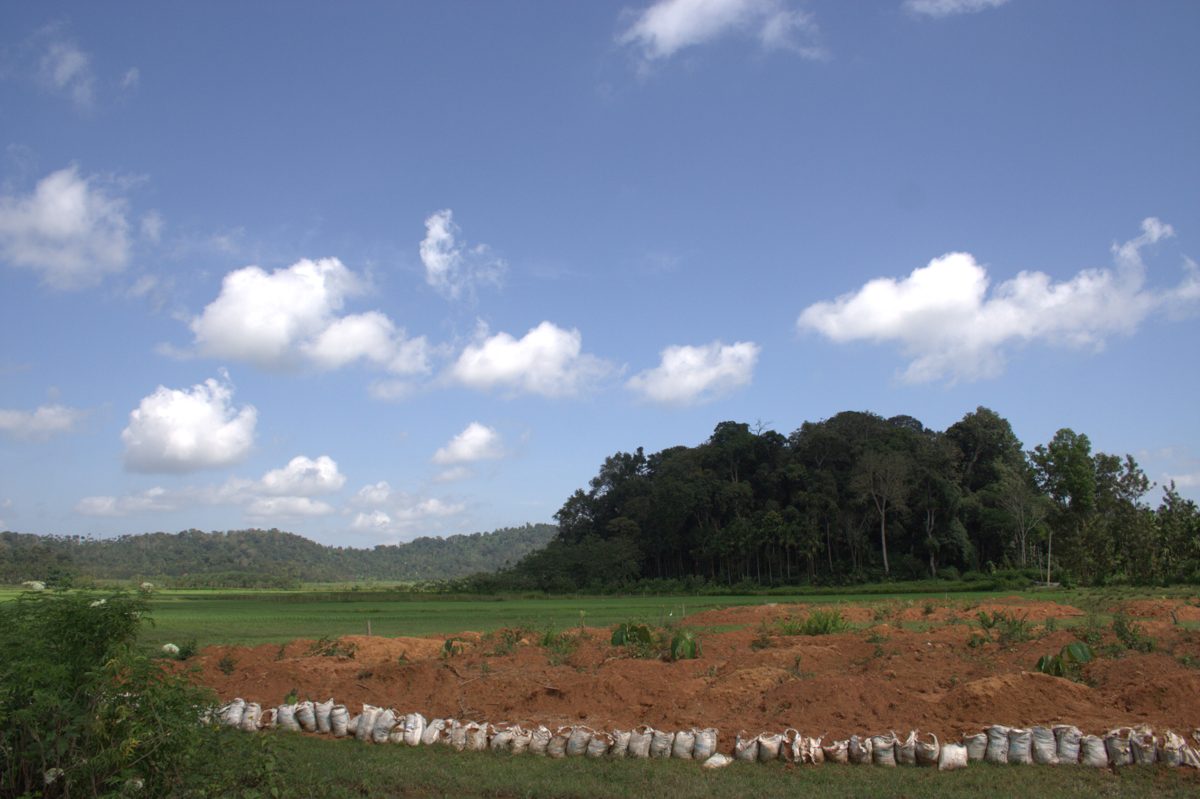
The names
The names are the map's legend. Each is a whole tradition, with its own deities and rules.
| Name | Where | What it is |
|---|---|---|
| Devrai, devrahati | Maharashtra, Goa | “God's grove”, in the Western Ghats and the Konkan. Gadgil and Vartak's surveys of the 1970s made them famous; about 1,600 are known in Maharashtra. |
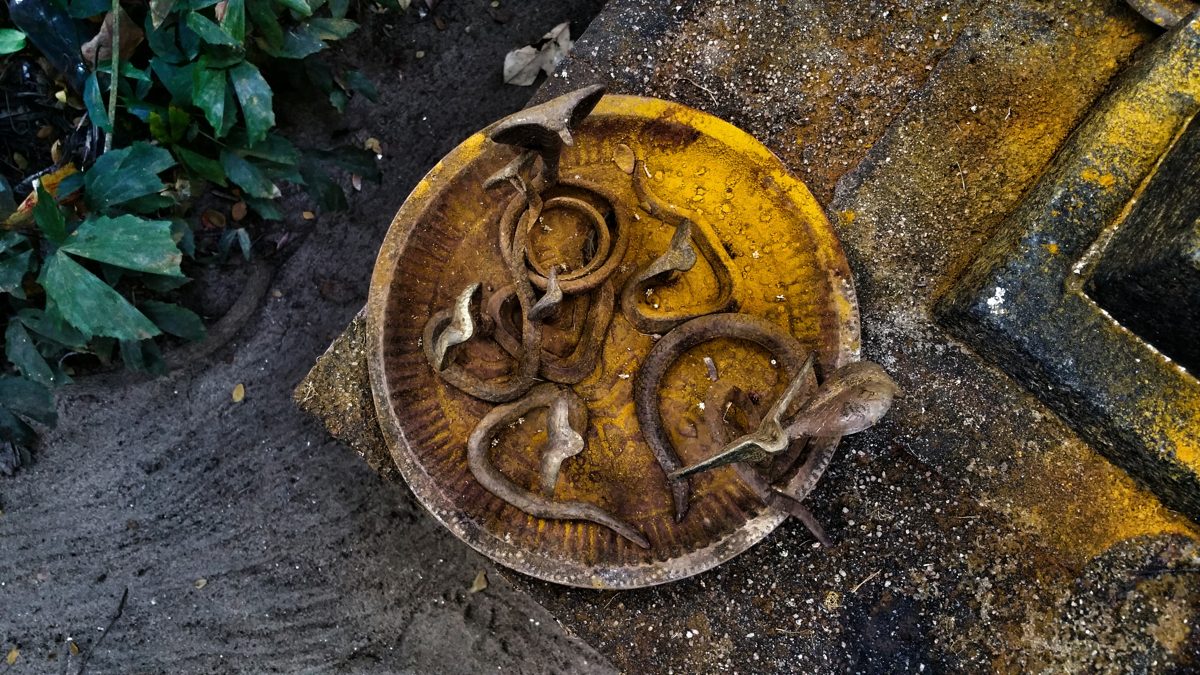
| Kavu | Kerala | Many kinds: Ayyappan and Bhagavathi kavu kept by villages, Madan and Yekshi kavu by tribal communities, and sarpa kavu, the serpent groves once kept by every well-to-do Nair and Nambudiri family. |
| Kovil kadu | Tamil Nadu | “Temple forest”. Tamil Nadu also keeps sthalavriksha, a sacred tree at each temple: more than 250 documented, of over 70 species. |
| Devarakadu | Karnataka | In Kodagu alone the forest department counted and marked 873 in 1873; about 1,214 are on its records today. |
| Oran | Rajasthan | Desert commons around a shrine: grazing, fodder and water for the village, often thousands of acres. Also vani in Mewar, kenkri in Ajmer, devbani in Alwar. |
| Law kyntang, law lyngdoh | Meghalaya | Khasi forests kept for sacrifices and ceremonies. The Khasi durbar set out the kinds in 1925, from law lyngdoh, which no one may use, to law shnong, the village's own forest. |
| Umanglai | Manipur | Groves of the Meitei jungle deity; 365 are recorded. |
| Dev van, deovan | Himachal Pradesh, Uttarakhand | “God's forest” in the hills of Shimla, Mandi, Kullu and Lahaul-Spiti; Himachal alone reports some 5,000. |
| Sarna, jahera | Jharkhand, Odisha | Groves at the heart of Adivasi village worship, usually under an acre: sarhul sarna, mahadani sarna and others. |
| Gumpa forests | Sikkim, Arunachal Pradesh | Forests attached to Buddhist monasteries, looked after by the lamas. |
Names and counts from Malhotra et al. (2001) and the state accounts it collects.

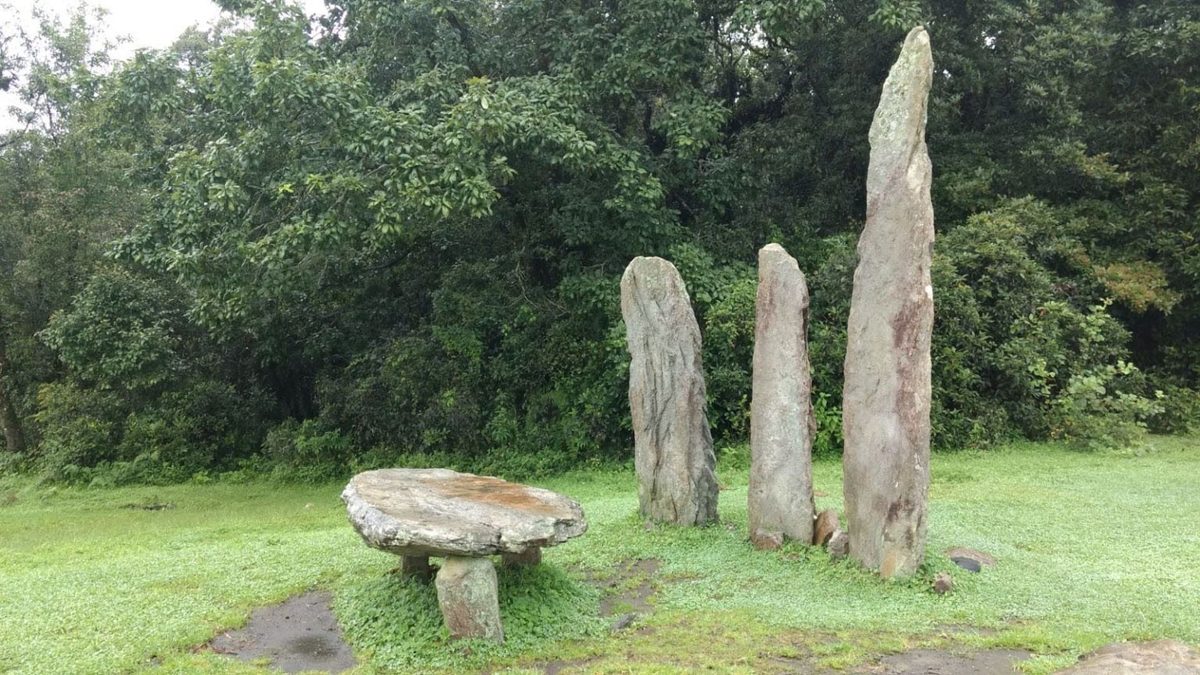

What lives in them
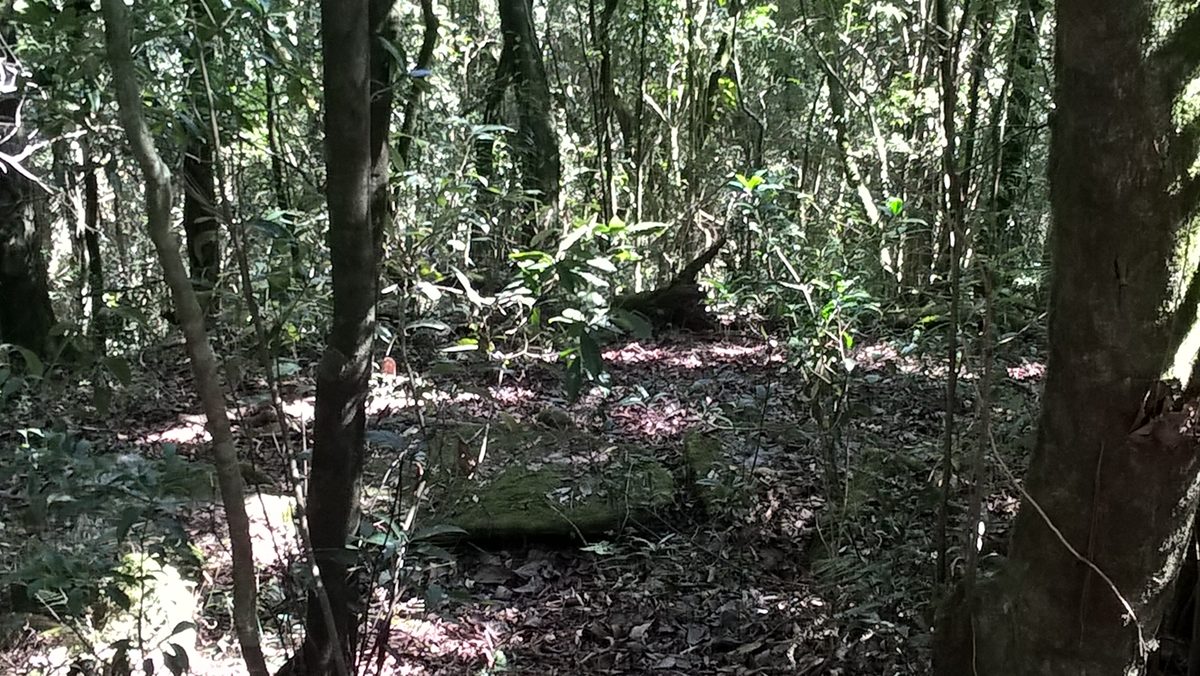
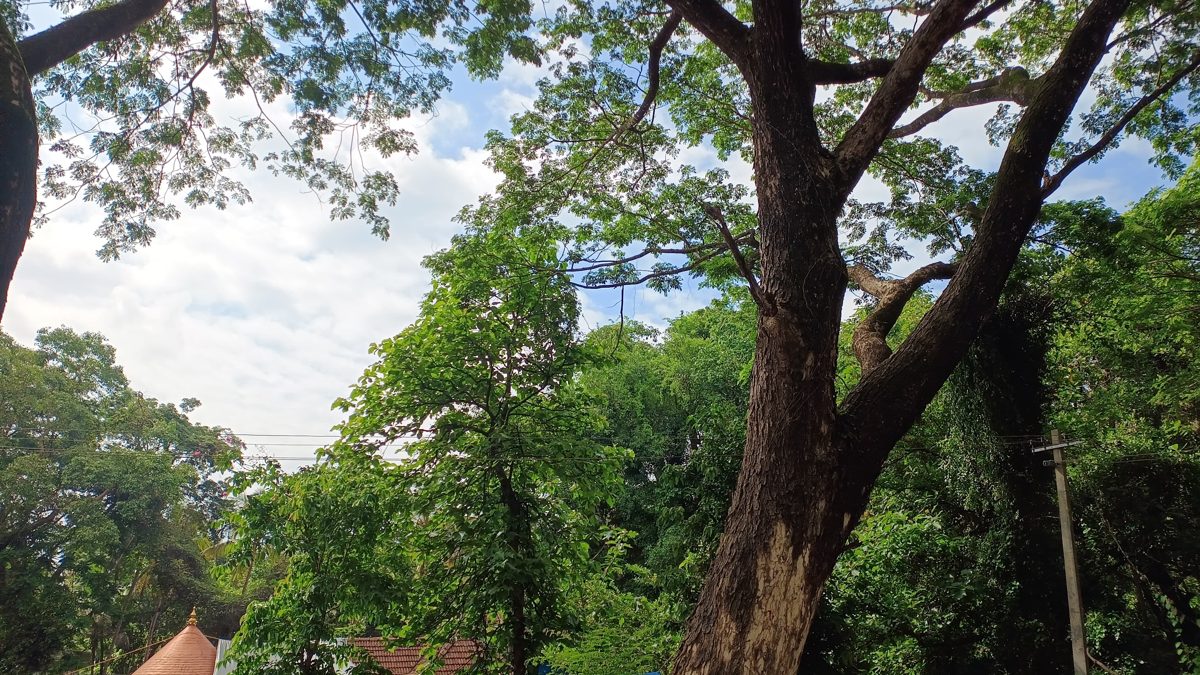
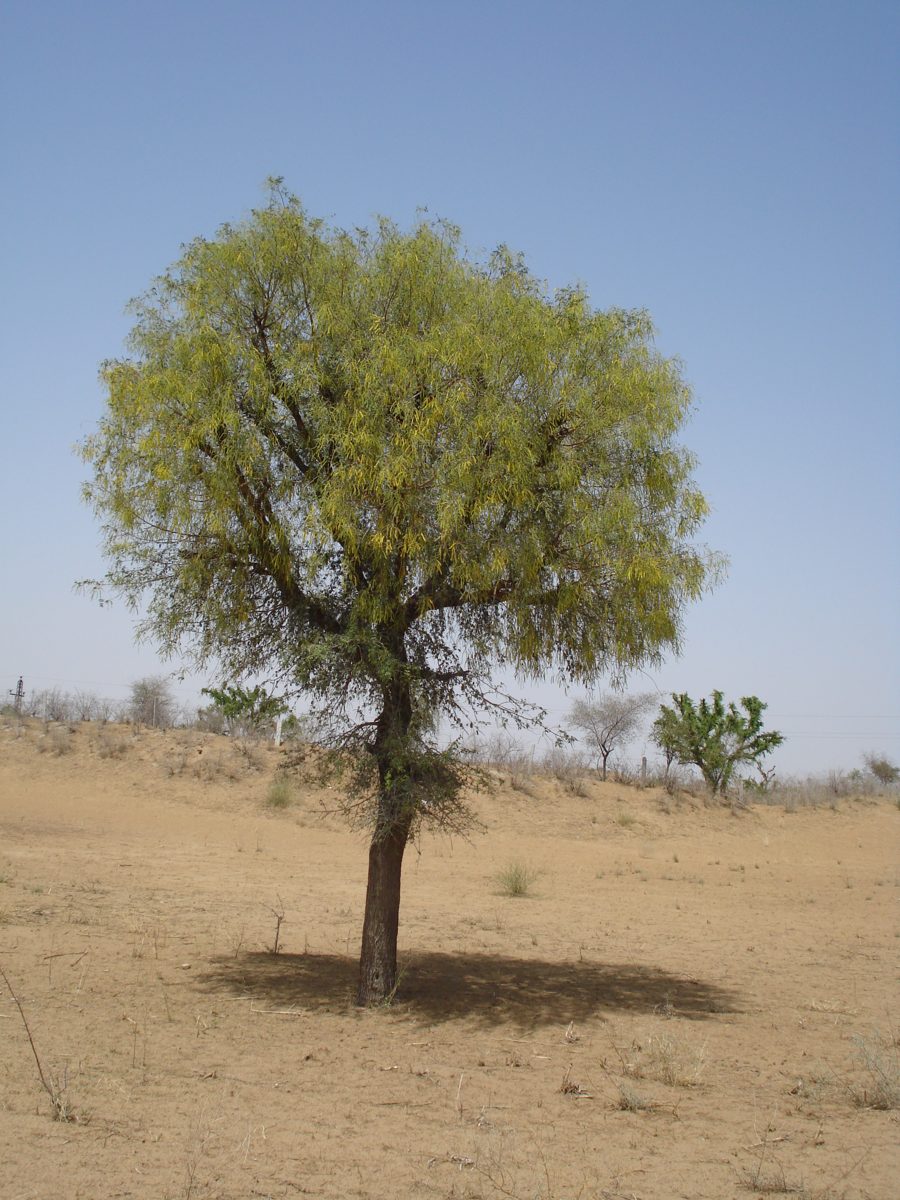
Many groves are the only near-natural forest left in their landscape: in the Western Ghats, in Koraput and Kalahandi in Odisha, in south-western Bengal. They hold species that are gone elsewhere. Syzygium travancoricum, a tree wiped out at the Kerala forest where it was first described, survives in a few sacred groves of Pathanamthitta district. Kunstleria keralensis, a climbing legume, is known from a single grove in southern Kerala. A new frog, Philautus sanctisilvaticus, was named from the Amarkantak sacred grove in Madhya Pradesh. In Rajasthan the orans kept by the Bishnoi shelter the Indian gazelle, blackbuck and the migrating demoiselle crane, and the khejri tree holds the whole system together.

.jpg)
Water and soil
Many groves hold a spring, a pond or the head of a stream, and the forest itself soaks up rain and lets it out slowly through the dry months. In the Mawsmai groves near Cherrapunji, among the wettest places on earth, a mat of fine roots at the surface holds nutrients that the rain would otherwise wash from thin soil; the land around them, without that mat, no longer carries forest.
The law
- Community reserves. Since 2003, the Wildlife (Protection) Act lets a state declare community or private land a community reserve at the community's request (section 36C): the route the Supreme Court pointed to for groves.
- Forest rights. Under the Forest Rights Act, 2006, a gram sabha can claim a grove as a community forest resource and manage it.
- The Supreme Court, 18 December 2024. Rajasthan's orans are forests under the Forest Conservation Act; the state must map every sacred grove, whatever it is locally called, on the ground and by satellite; and the Union environment ministry should survey groves nationwide and frame a policy. The case was brought by Aman Singh of KRAPAVIS, Alwar.
What wears them away
- Commercial forestry. Over two centuries villages lost their say over forests to the state, and many groves were logged.
- Development. Townships, railways and highways took groves; dams flooded others.
- A change of faith. Where a village converts, the grove can lose the belief that kept it.
- A new god. Local deities replaced by pan-Hindu ones bring a temple into the grove, and the forest is cleared around it.
After Malhotra et al. (2001), section 3.
Who works on them
| Who | Where | What they do |
|---|---|---|
| C.P.R. Environmental Education Centre (ENVIS centre on ecological heritage) | Chennai | Keeps the state-by-state registers of sacred groves that Devrai's counts come from. |
| KRAPAVIS | Alwar, Rajasthan | Works with communities on orans; brought the case the Supreme Court decided in 2024. |
| Centre for Ecological Sciences, Indian Institute of Science | Bengaluru | Madhav Gadgil and colleagues' surveys of the Western Ghats groves from the 1970s on. |
| State forest departments and biodiversity boards | Every state | Registers, notification, and, since the 2024 judgment, mapping in Rajasthan. |
Papers
- The sacred groves of Western Ghats in India · Gadgil M, Vartak VD · 1976 · Economic Botany 30:152–160 · doi:10.1007/BF02862961
- Cultural and ecological dimensions of sacred groves in India · Malhotra KC, Gokhale Y, Chatterjee S, Srivastava S · 2001 · Indian National Science Academy and Indira Gandhi Rashtriya Manav Sangrahalaya · PDF
- Sacred groves: potential for biodiversity management · Bhagwat SA, Rutte C · 2006 · Frontiers in Ecology and the Environment 4:519–524 · doi:10.1890/1540-9295(2006)4[519:SGPFBM]2.0.CO;2
- Sacred forests of India: a strong tradition of community-based natural resource management · Ormsby AA, Bhagwat SA · 2010 · Environmental Conservation 37:320–326 · doi:10.1017/S0376892910000561
The judgment: Mongabay India, Down To Earth. Photos from Wikimedia Commons, credited under each one.